
Every agency has one.
A project they quietly avoid mentioning.
Not because it failed.
Not because the client was terrible.
But because it slowly unraveled.
No explosion.
No dramatic meltdown.
Just a long stretch of confusion, stress and meetings where nobody could quite explain what was happening.
If you’ve been in agency life long enough, you know the one.
This is mine.
Later in this article I’ll share the planning framework we built after this project collapsed — the one that probably saved our agency from losing millions in future projects and helped keep our best developers from burning out and walking out the door.
Short on time? If you’d rather skip the war story and go straight to the Blueprint tools, you can jump ahead.
But first, the story.
The one I still remember

The moment every agency loves: winning a big new project and imagining everything going perfectly.
At the time, I was running a digital agency called Atomic Interactive.
We were about six or seven years in.
The early years had been good.
Projects came through referrals.
Competition locally was still thin.
Then things started to shift.
More agencies appeared.
Clients started shopping around.
We had to get sharper with our pitches.
So when a large corporate sign manufacturer came to us with a massive ecommerce project, we were excited.
This was a big one.
They wanted a custom ecommerce platform built on Magento.
But it wasn’t a typical online store.
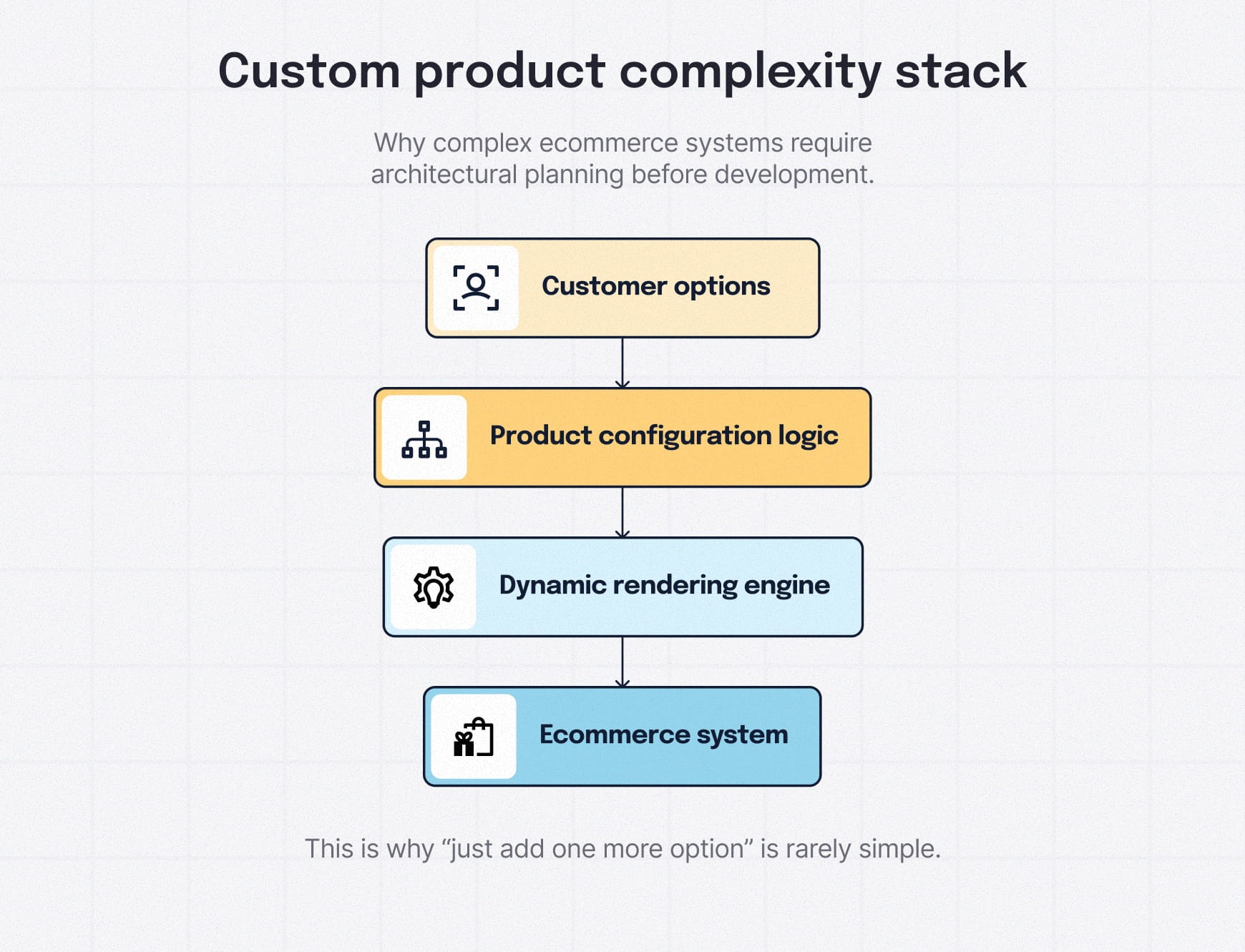
Customers would be able to build custom signs online as part of a much larger website planning and design process.
Choose materials. Choose finishes. Choose lighting.
As they changed options, the sign preview would update dynamically.
It was a complex system.
But it was also a big project with a big budget.
The kind that pays the bills and keeps your team busy for months.
We pitched it.
We won it.
And everyone was excited.
The question nobody could answer
The first signal was subtle.
We were in a project meeting.
The usual update meeting.
Someone asked a simple question.
Where are we in the project?
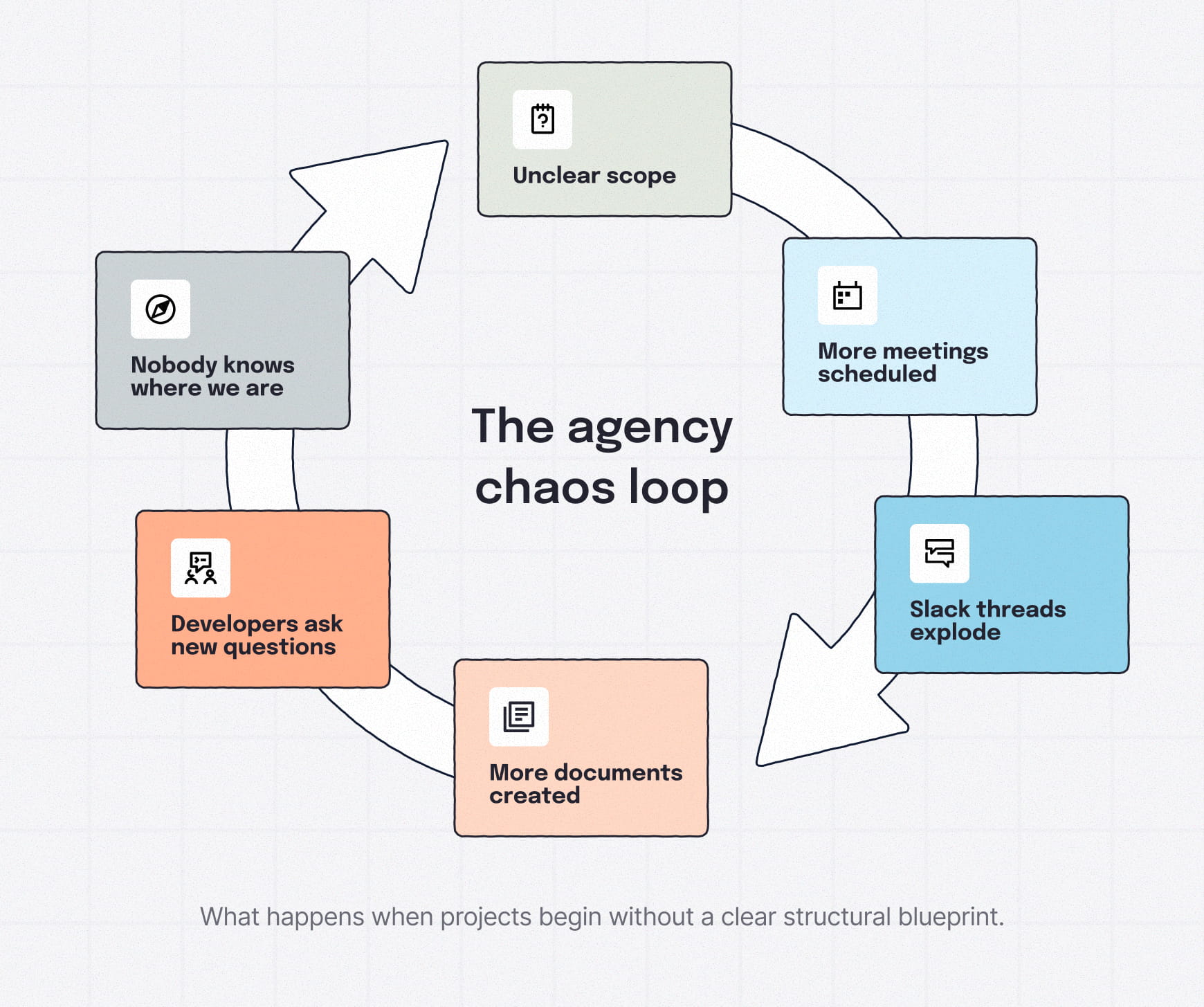
Nobody had a clean answer.
The project manager thought we were waiting on the client.
The client thought we were waiting on development.
Development said they needed clarification.
So we scheduled another meeting.
Then another.
Documents started appearing.
Slack threads grew longer.
Everyone was busy.
But clarity never arrived.
I remember sitting in one of those meetings thinking:
Why does this suddenly feel so slippery?
The moment everything shifted
Eventually, the developers started building the custom sign builder.
This was the hard part.
Dynamic product options.
Custom rendering logic.
A system where every option affects everything else.
Then the feature requests started expanding.
More options.
More variables.
More custom logic.
One of the developers finally said something like:
Wait… this wasn’t in the scope.
Another developer looked at the work required and said:
If we build all of this, the project budget is gone.
The worst moment wasn’t when the client asked for more features.
The worst moment was realizing the developers had already started building the system.
When we realized we were paying to build their website
That’s the point no agency ever wants to reach.
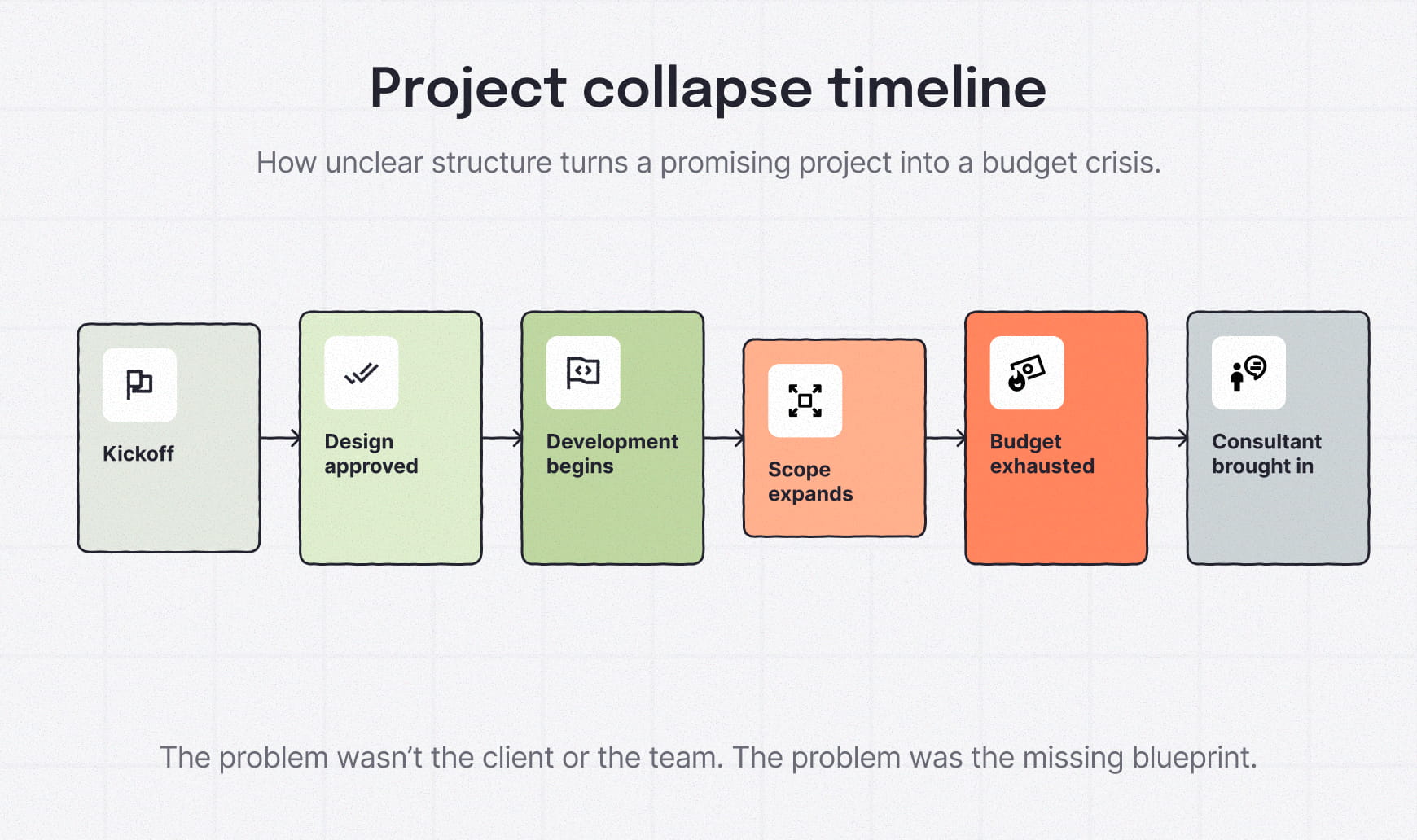
We had already burned through the project budget.
And we were barely halfway through development.
The client still expected the system described in the proposal.
And from their perspective, they weren’t wrong.
Our proposal had been thin.
We had interpreted parts of it one way.
They interpreted it another.
The developers were frustrated.
The project manager was stuck.
Sales felt defensive.
At one point, we even brought in a project management consultant to help untangle the situation.
That’s not something you do when a project is going smoothly.
The real diagnosis
At the time, we thought we had a scope problem.
But months later I realized something else.
We thought we had a scope problem.
What we actually had was a structure problem.
The project never had a true website information architecture blueprint.
There was no sitemap creator or structural model that everyone could reference before development began.
We didn’t have a fully modeled architecture.
We didn’t have a shared system map.
We had mockups.
We had assumptions.
We had a thin proposal.
But we didn’t have a structural model of the system.
And that’s the rule we had unknowingly broken.
Architecture must come before interface.
When design starts before structure is clear, the project is already unstable.
The shift: modeling before building
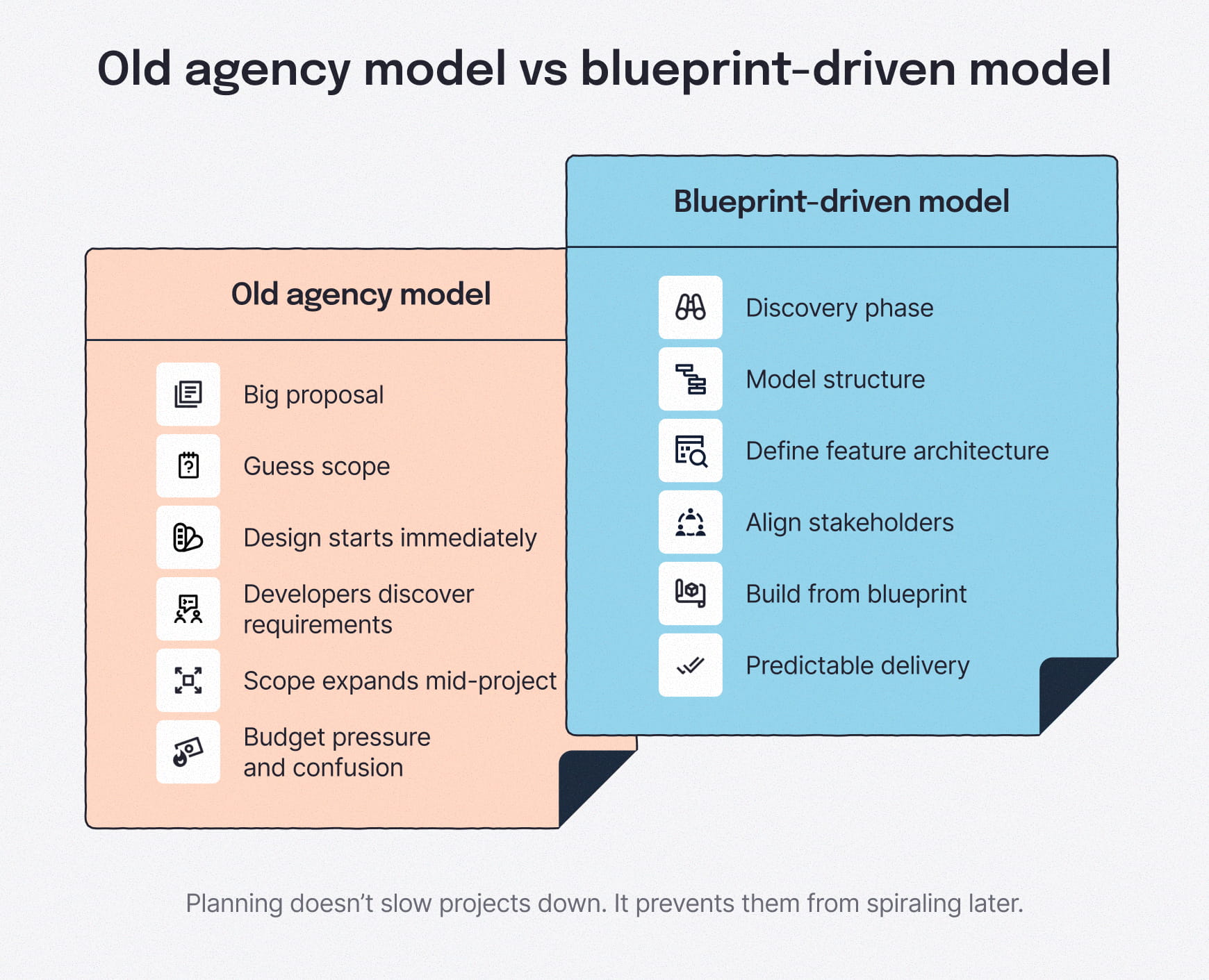
After that project we changed our entire process.
We stopped selling giant proposals.
Instead, we introduced paid discovery phases.
Large projects started with planning.
Not design.
Not development.
Planning.
We would map:
- the website sitemap
- the system architecture
- feature logic
- development requirements
- stakeholder expectations
Clients paid for this work.
And we told them something very simple.
Once we build the blueprint, you can take it to anyone.
But something interesting happened.
They almost always came back to us to build the project.
Because by then we understood the system better than anyone.
What changed after that
Projects felt calmer.
The difference was immediate.
Developers trusted the plan.
Project managers had a clear system to manage.
Clients understood exactly what they were getting.
And the agency looked more professional.
We weren’t guessing anymore.
We were modeling the system before building it.
Why agencies don’t talk about these projects
Most agencies have a story like this.
But they rarely talk about it.
Because it feels like incompetence.
It feels like the team failed.
Or the client was impossible.
But most of the time that isn’t true.
The real issue is simpler.
The project didn’t have enough website structure planning.
When structure is missing, complexity multiplies.
Scope drifts.
Meetings multiply.
Developers start guessing.
And eventually the project collapses under its own weight.
Quick structural audit
Before your next large website project, ask yourself:
- Can you see the full site structure before design begins?
- Are system requirements modeled before development starts?
- Do stakeholders share the same blueprint?
- Can developers understand the system before writing code?
- Is the architecture documented before the proposal is finalized?
If you answered "no" to any of these, you probably don’t have a team problem.
You have a structure problem.
And you don’t fix structure with better communication.
You fix it by modeling the system before you build it.
That realization is what led us to build the Agency Project Blueprint System — the structural planning framework we now use before every major website project.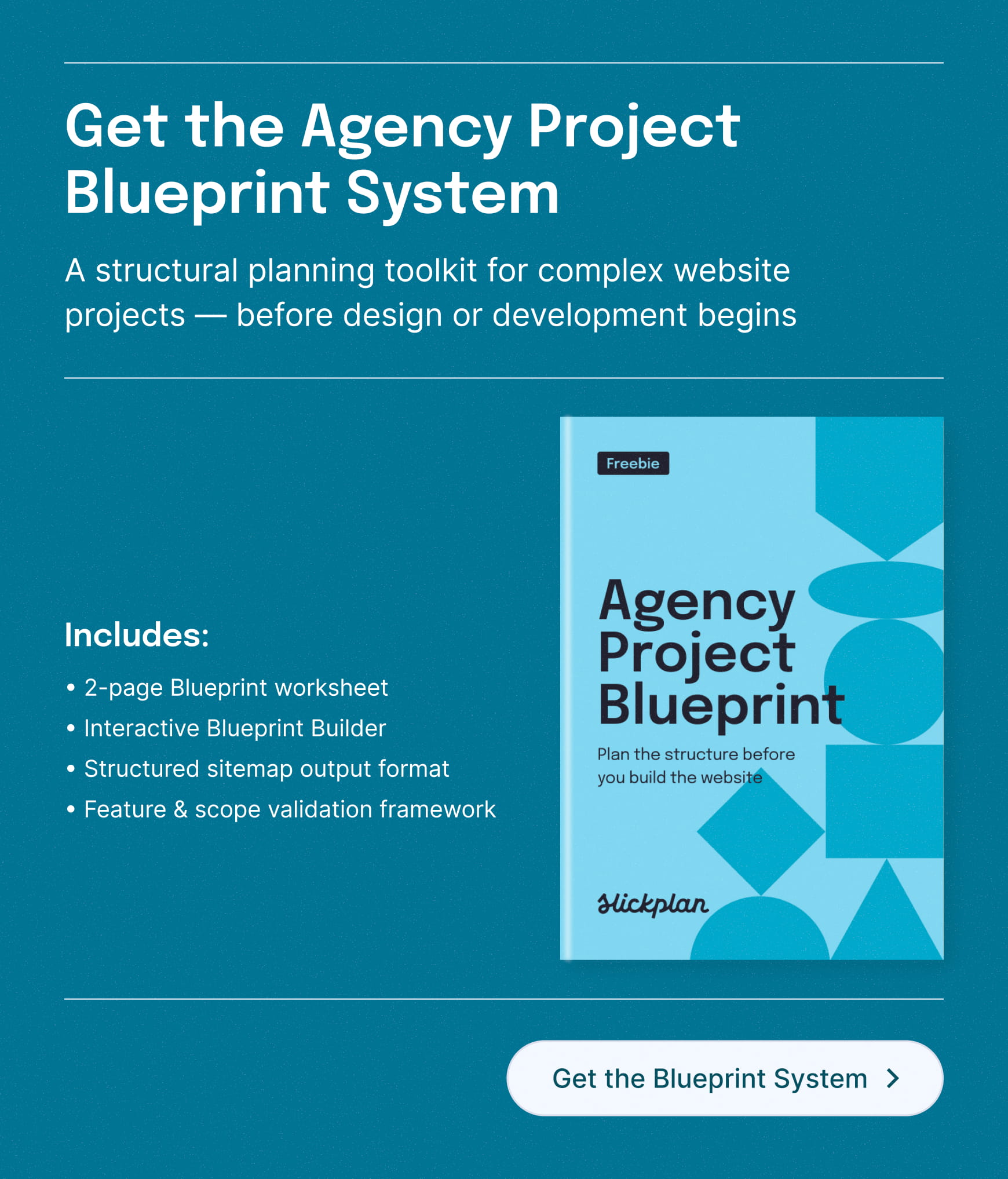
Want to go deeper?
The Blueprint System includes both:
- A clean, printable planning worksheet
- An interactive Blueprint Builder that guides you step-by-step and generates a structured website outline
You’ll receive both instantly.
The difference between chaotic agencies and scalable ones
Most agencies assume success comes from creativity.
Or better communication.
Or better clients.
Those things matter.
But the agencies that scale reliably tend to share something else.
Structure.
They treat planning as infrastructure.
They model systems before building them.
They align teams before development begins.
And they remove ambiguity before it turns into scope creep.
The agencies that scale aren’t the most creative.
They’re the most structurally mature.
That maturity usually starts with one simple shift:
Model the system before you build it.


 Facebook
 X
X Youtube
 LinkedIn
 Vimeo
Vimeo